

FC SDS Progress Report
Project Title: “Strengthening the System for the Provision of Essential Health Services at the Institutional and Community Levels in the Fergana, Jizzakh, and Syrdarya Regions of Uzbekistan”
(Agreement between the United Nations Office for Project Services (UNOPS) and the International Non-Governmental Charitable Foundation “Soglom Avlod Uchun” dated March 26, 2026)
Reporting Period: March 26 – May 31, 2026
Country: Republic of Uzbekistan
Submitted by: INTERNATIONAL NON-GOVERNMENTAL CHARITABLE FOUNDATION “SOGLOM AVLOD UCHUN” GRANT NUMBER: STBP/USG/GSA/2026-08
National Project Coordinator – N.E. Muminov
Date of Submission: June 11, 2026
1. Summary
Brief overview of key achievements
As part of the project implementation, the Fund, in accordance with applicable law, submitted an application to the Ministry of Justice of the Republic of Uzbekistan for the implementation of this project and received the relevant approval (letter dated April 6, 2026, No. 21/6-MAP-5540) for the project’s implementation.
The Foundation then informed UNOPS of this authorization from the Ministry of Justice of the Republic of Uzbekistan to implement the project. Subsequently, on April 10, 2026, UNOPS transferred funds in the amount of $249,989 to a separate special bank account of the Foundation. The Foundation then began work on the project’s implementation.
In addition, as part of the joint implementation of the project, the Fund developed and submitted a draft Memorandum of Cooperation to the Ministry of Health of the Republic of Uzbekistan on April 16, 2026, which was signed on April 21, 2026, by the Ministry of Health of the Republic of Uzbekistan, and a corresponding directive was sent to the Jizzakh, Syrdarya, and Fergana regional health departments (letter No. 05-11/11006 dated April 24, 2026) to assist the “Soglom Avlod Uchun” Foundation in implementing the project.
A brief overview of progress towards achieving the project’s objectives
To fulfil the project’s objectives, the Fund carried out work and conducted visits to pilot regions to interview and recruit staff for the MDK. Specifically, visits were made to the Syrdarya region on 16–17 April this year, to the Jizzakh region on 22–23 April this year, and to the Fergana region on 28–29 April this year. The next phase involved training sessions for MDC specialists, specifically in the Syrdarya Region on 24–25 April this year, in the Jizzakh Region on 1–2 April this year, and in the Fergana Region on 28–29 April this year.
2. Project progress by objective
Objective 1: COVERAGE:
To strengthen the detection of tuberculosis cases across all age groups by supporting active case finding at the community level, facilitating contact tracing, and mobilising communities to raise awareness and refer individuals with tuberculosis symptoms to authorised diagnostic services.
A brief overview of progress towards achieving the project’s objectives
To fulfil the project’s objectives, the Fund carried out work and conducted visits to pilot regions to interview and recruit staff for the MDK. Specifically, visits were made to the Syrdarya region on 16–17 April this year, to the Jizzakh region on 22–23 April this year, and to the Fergana region on 28–29 April this year. The next phase involved training sessions for MDK specialists, specifically in the Syrdarya Region on 24–25 April this year, in the Jizzakh Region on 1–2 April this year, and in the Fergana Region on 28–29 April this year.
2. Project progress by objective
Objective 1: COVERAGE:
To strengthen the detection of tuberculosis cases across all age groups by supporting active case finding at the community level, facilitating contact tracing, and mobilising communities to raise awareness and refer individuals with tuberculosis symptoms to authorised diagnostic services.
Activities carried out:
1.1. Establishment of MDC teams in the regions
1.2. Delivery of training sessions for MDC specialists on tuberculosis, reducing stigma and discrimination, and developing communication skills. Familiarisation and training in skills for working with MDC record-keeping and reporting documentation.
1.3. Conducting individual and/or group educational sessions (mini-sessions) on tuberculosis for vulnerable population groups. Conducting tuberculosis screening among population groups vulnerable to tuberculosis using questionnaires. Referring/accompanying individuals from the target group with suspected TB for tuberculosis diagnosis.
1.4. "Coordination of mobile tuberculosis screening campaigns with primary healthcare facilities (including community health visitors) and the tuberculosis service, using questionnaires on TB symptoms, mobile X-ray units and CAD technologies, particularly in remote and hard-to-reach areas.
In particular, a total of 5 joint campaigns were conducted during the reporting period, including in the Syrdarya region: on 30 April this year, covering 78 people and identifying 4 TB patients (2 active TB, 2 latent TB infection), on 5 May this year, covering 82 people and identifying 8 TB patients (extrapulmonary TB), on 8 May this year, covering 162 people and identifying 18 TB patients (extrapulmonary TB), and on 22 May this year, covering 130 people. Similarly, in the Fergana region on 21 May this year, 113 people were screened and 3 TB patients (LTI) were identified.
Progress achieved (compared to targets):
To implement a project aimed at improving access to high-quality tuberculosis treatment services for vulnerable population groups, the Fund has signed a separate memorandum of understanding with the Ministry of Health of the Republic of Uzbekistan on the successful implementation of the project; multidisciplinary teams (MDTs) have been established in three pilot regions.
In the Jizzakh region, the MDT office was established in the city of Jizzakh at the regional centre for phthisiology and pulmonology. Seventeen staff members were recruited to the MDT team – a coordinator, a nurse, a psychologist, a phthisiologist, a social worker and 12 outreach workers. Activities are carried out in five districts of the region: Arnasay District, Dustlik District, Zarbdor District, Zafarabad District and Mirzachul District.
In the Syrdarya region, the MDK office has been set up in the town of Gulistan, based at the premises of the Syrdarya regional branch of the ‘Soglom Avlod Uchun’ Foundation. Nineteen staff members have been recruited to the MDC team – a coordinator, a nurse, a psychologist, a TB specialist, a social worker and 14 outreach workers. Activities are carried out in five districts of the region: Sayhunabad District, Gulistan District, Sardoba District, Mirzaabad District and the city of Yangier.
In the Fergana Region, the MDK office is based in the city of Fergana, in the building of the Fergana regional branch of the ‘Soglom Avlod Uchun’ Foundation. Thirty-six staff members have been recruited to the MDK team: a coordinator, two nurses, a psychologist, two TB specialists, two social workers and 28 outreach workers. Activities are carried out in five districts of the region: Altyaryk District, Kushtepa District, Kuvin District, Rishan District and the town of Kuvasay.
A total of 72 people have been recruited to implement the project in the regions.
Education and training:
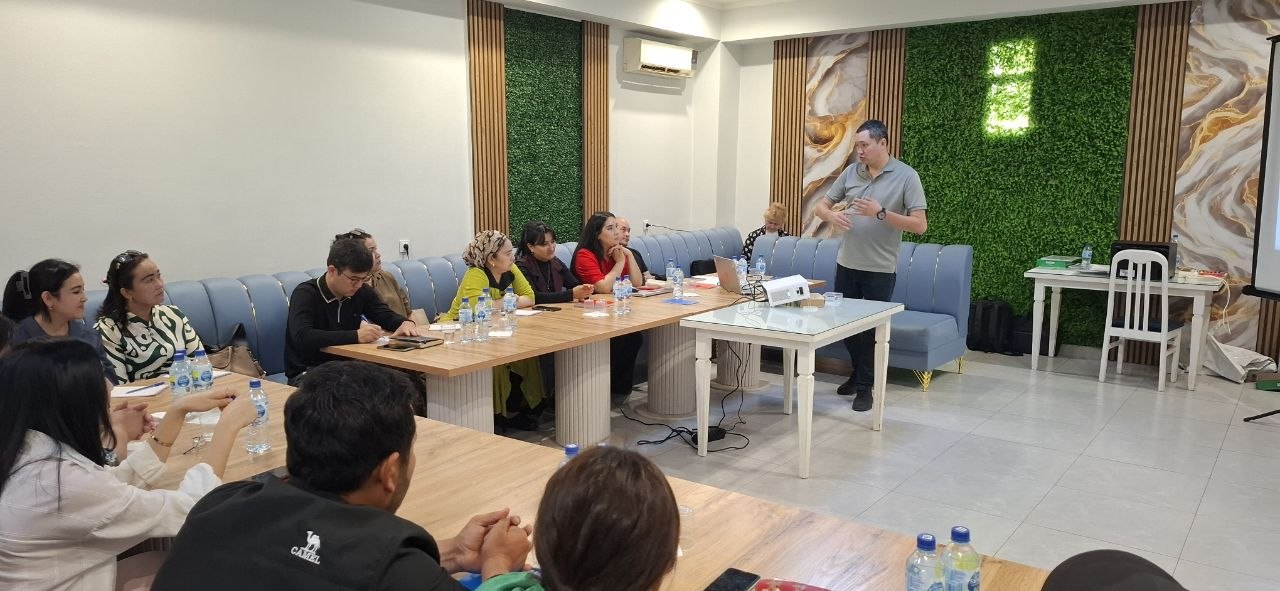
Two-day training sessions were held in each region to train MDC specialists. These took place on 24–25 April in Gulistan, 1–2 May in Jizzakh, and 7–8 May in Fergana. Training topic: “A multidisciplinary approach to the detection, treatment and prevention of tuberculosis”, during which teams received training on tuberculosis, reducing stigma and discrimination, developing communication skills and working with the community. Participants were familiarised with MDC documentation. The training participants enhanced their knowledge of tuberculosis, understood their role in improving detection rates for tuberculosis and drug-resistant tuberculosis (DR-TB), as well as in reducing stigma and discrimination, and acquired skills in providing psychosocial support to people affected by tuberculosis. Well-trained staff from the multidisciplinary teams will support the project in delivering patient-centred care, with a focus on tuberculosis treatment, social integration, successful completion of treatment, preventing the spread of the disease, implementing tools, and accelerating progress in the fight against tuberculosis.
During the reporting period, MDK specialists organised activities aimed at raising awareness of tuberculosis and promoting the early detection of the disease among vulnerable population groups. A total of 4,138 individual and group mini-sessions were held on the prevention, detection, treatment and maintenance of adherence to tuberculosis treatment; 4,257 (1,718 men, 2,539 women) tuberculosis screenings were carried out; and 917 (347 men, 570 women) people underwent examination. 25 (11 men, 14 women) cases of active tuberculosis (TB) were identified, 4 (2 men, 2 women) cases of latent tuberculosis (TB), and 58 (21 men, 37 women) cases of latent tuberculosis infection (TB).
|
Report on the activities of the MDK for the period from 24 April to 31 May 2026 |
|||||
|
Regions |
Screening Examined |
TB cases |
detected |
LTIs |
Mini-sessions |
|
Fergana |
2162 |
284 |
7 |
13 |
2043 |
|
Syrdarya |
1395 |
524 |
14 |
39 |
1395 |
|
Jizzakh |
700 |
109 |
8 |
6 |
700 |
|
Total |
4257 |
917 |
29 |
58 |
4138 |
Key issues and ways to address them
- Issues identified:
1) Incomplete screening coverage
Of the 1,078 people referred to primary healthcare facilities, 161 patients have not yet undergone screening; however, psychologists and outreach workers are working with them to emphasise the need for TB diagnosis.
Main reasons:
low motivation and fear of a possible diagnosis;
social barriers (stigma, discrimination, self-stigmatisation);
limited capacity for transporting and accompanying patients. These factors can significantly reduce the effectiveness of screening activities and lead to the risk of late diagnosis.
2) Hard-to-reach areas
Organising mobile outreach campaigns in remote areas remains a challenging task. Problems include:
limited access to transport infrastructure;
low population density and difficulties in mobilising target groups;
a shortage of specialist staff within primary healthcare services to cover such areas on a regular basis. This leads to unequal access to services and reduces coverage of vulnerable groups.
Next steps (plans for the coming quarter):
A brief overview of progress towards achieving the project’s objectives
To fulfil the project’s objectives, the Fund carried out work and conducted visits to pilot regions to interview and recruit staff for the MDK. Specifically, visits were made to the Syrdarya region on 16–17 April this year, to the Jizzakh region on 22–23 April this year, and to the Fergana region on 28–29 April this year. The next phase involved training sessions for MDC specialists, specifically in the Syrdarya Region on 24–25 April this year, in the Jizzakh Region on 1–2 April this year, and in the Fergana Region on 28–29 April this year.
2. Project progress by objective
Objective 1: COVERAGE:
To strengthen the detection of tuberculosis cases across all age groups by supporting active case finding at the community level, facilitating contact tracing, and mobilising communities to raise awareness and refer individuals with tuberculosis symptoms to authorised diagnostic services.
A brief overview of progress towards achieving the project’s objectives
To fulfil the project’s objectives, the Fund carried out work and conducted visits to pilot regions to interview and recruit staff for the MDK. Specifically, visits were made to the Syrdarya region on 16–17 April this year, to the Jizzakh region on 22–23 April this year, and to the Fergana region on 28–29 April this year. The next phase involved training sessions for MDK specialists, specifically in the Syrdarya Region on 24–25 April this year, in the Jizzakh Region on 1–2 April this year, and in the Fergana Region on 28–29 April this year.
2. Project progress by objective
Objective 1: COVERAGE:
To strengthen the detection of tuberculosis cases across all age groups by supporting active case finding at the community level, facilitating contact tracing, and mobilising communities to raise awareness and refer individuals with tuberculosis symptoms to authorised diagnostic services.
Activities carried out:
1.1. Establishment of MDC teams in the regions
1.2. Delivery of training sessions for MDC specialists on tuberculosis, reducing stigma and discrimination, and developing communication skills. Familiarisation and training in skills for working with MDC record-keeping and reporting documentation.
1.3. Conducting individual and/or group educational sessions (mini-sessions) on tuberculosis for vulnerable population groups. Conducting tuberculosis screening among population groups vulnerable to tuberculosis using questionnaires. Referring/accompanying individuals from the target group with suspected TB for tuberculosis diagnosis.
1.4. "Coordination of mobile tuberculosis screening campaigns with primary healthcare facilities (including community health visitors) and the tuberculosis service, using questionnaires on TB symptoms, mobile X-ray units and CAD technologies, particularly in remote and hard-to-reach areas.
In particular, a total of 5 joint campaigns were conducted during the reporting period, including in the Syrdarya region: on 30 April this year, covering 78 people and identifying 4 TB patients (2 active TB, 2 latent TB infection), on 5 May this year, covering 82 people and identifying 8 TB patients (extrapulmonary TB), on 8 May this year, covering 162 people and identifying 18 TB patients (extrapulmonary TB), and on 22 May this year, covering 130 people. Similarly, in the Fergana region on 21 May this year, 113 people were screened and 3 TB patients (LTI) were identified.
Progress achieved (compared to targets):
To implement a project aimed at improving access to high-quality tuberculosis treatment services for vulnerable population groups, the Fund has signed a separate memorandum of understanding with the Ministry of Health of the Republic of Uzbekistan on the successful implementation of the project; multidisciplinary teams (MDTs) have been established in three pilot regions.
In the Jizzakh region, the MDT office was established in the city of Jizzakh at the regional centre for phthisiology and pulmonology. Seventeen staff members were recruited to the MDT team – a coordinator, a nurse, a psychologist, a phthisiologist, a social worker and 12 outreach workers. Activities are carried out in five districts of the region: Arnasay District, Dustlik District, Zarbdor District, Zafarabad District and Mirzachul District.
In the Syrdarya region, the MDK office has been set up in the town of Gulistan, based at the premises of the Syrdarya regional branch of the ‘Soglom Avlod Uchun’ Foundation. Nineteen staff members have been recruited to the MDC team – a coordinator, a nurse, a psychologist, a TB specialist, a social worker and 14 outreach workers. Activities are carried out in five districts of the region: Sayhunabad District, Gulistan District, Sardoba District, Mirzaabad District and the city of Yangier.
In the Fergana Region, the MDK office is based in the city of Fergana, in the building of the Fergana regional branch of the ‘Soglom Avlod Uchun’ Foundation. Thirty-six staff members have been recruited to the MDK team: a coordinator, two nurses, a psychologist, two TB specialists, two social workers and 28 outreach workers. Activities are carried out in five districts of the region: Altyaryk District, Kushtepa District, Kuvin District, Rishan District and the town of Kuvasay.
A total of 72 people have been recruited to implement the project in the regions.
Education and training:
Two-day training sessions were held in each region to train MDC specialists. These took place on 24–25 April in Gulistan, 1–2 May in Jizzakh, and 7–8 May in Fergana. Training topic: “A multidisciplinary approach to the detection, treatment and prevention of tuberculosis”, during which teams received training on tuberculosis, reducing stigma and discrimination, developing communication skills and working with the community. Participants were familiarised with MDC documentation. The training participants enhanced their knowledge of tuberculosis, understood their role in improving detection rates for tuberculosis and drug-resistant tuberculosis (DR-TB), as well as in reducing stigma and discrimination, and acquired skills in providing psychosocial support to people affected by tuberculosis. Well-trained staff from the multidisciplinary teams will support the projec